Dental Implant Failure: Causes, Signs, and Prevention
Dental implants have changed restorative dentistry in a meaningful way. For many patients, they offer something that bridges and removable dentures often cannot: a stable, long-term replacement that feels close to a natural tooth. When treatment goes well, the result is functional, aesthetic, and durable. Patients eat more comfortably, speak with more confidence, and stop thinking about the missing tooth altogether, which is usually the real mark of success.
That said, implant dentistry is not magic, and it is not immune to complications. An implant can fail early, before it ever fully integrates with the bone, or years later after an apparently successful start. Failure is not always dramatic. Sometimes it presents as pain and mobility. Just as often, it develops quietly, with gradual bone loss, subtle inflammation, or a change in bite that the patient does not connect to the implant until the problem is advanced.
Understanding why dental implant failure happens matters for two reasons. First, many failures are preventable. Second, when a problem is identified early, the odds of limiting damage and preserving treatment options improve substantially. In practice, the best outcomes usually come from a combination of careful planning, realistic case selection, precise surgery, well-designed restorations, and a patient who understands that implants require maintenance, not neglect.
What implant failure actually means
Patients often use the word “failure” to describe any implant-related problem, but clinicians usually divide the issue into two broad categories. The first is early failure, when the implant never properly osseointegrates. Osseointegration is the direct, stable connection between the implant surface and the surrounding bone. Without it, the implant cannot function as intended. Early failure may become obvious within weeks or months of placement, sometimes before the final crown is even attached.
The second is late failure. In these cases, the implant did integrate at first, often serving well for years, but later lost stability because the supporting bone and surrounding tissues broke down, or because mechanical complications placed the implant under forces it could not tolerate indefinitely. A patient may say, “It was fine for five years, then it started to hurt when I chewed.” That is a very different timeline from an implant that never settled from the start, but both end in the same place if not addressed.
An implant can also be “ailing” without being fully failed. That distinction matters. Soft tissue inflammation around an implant, sometimes called peri-implant mucositis, can often be managed if caught early. Once the inflammation progresses to peri-implantitis, where bone loss occurs around the implant, treatment becomes more difficult and prognosis more guarded. There is a spectrum between health and failure, and the earlier clinicians intervene on that spectrum, the better.
Why implants fail in the first place
There is rarely a single cause. More often, implant failure reflects an accumulation of risk factors, some biological and some mechanical. In clinical settings, the most predictable problems tend to arise when planning or maintenance falls short, or when a patient’s risk profile is underestimated.
Here are the most common contributors:
- Inadequate osseointegration, often related to poor bone quality, overheating during surgery, micromovement during healing, or systemic factors that impair healing
- Infection and inflammation around the implant, especially peri-implantitis associated with plaque accumulation, previous periodontal disease, or poor oral hygiene
- Excessive bite forces, parafunctional habits like clenching or grinding, or prosthetic designs that overload the implant
- Smoking, uncontrolled diabetes, and other health factors that reduce blood supply or alter immune response
- Surgical or restorative errors, including poor implant positioning, insufficient spacing, or an ill-fitting prosthesis
Each of these deserves a closer look, because prevention depends on understanding how failure develops in real patients rather than in idealized textbook cases.
Early failure often begins before the implant is placed
When an implant fails early, many people assume the body “rejected” it. True rejection is not really the right concept. Dental implants are typically made from biocompatible materials such as titanium, and while sensitivity to metals can exist, most early failures have much more ordinary explanations.
A common issue is the biology oaksdentistry.com Dental Implants of the site itself. Bone quality varies widely. Dense lower jaw bone often offers better initial stability than the softer bone frequently found in the upper back jaw. That does not mean upper implants routinely fail, only that they demand careful planning. If an implant is placed in bone with limited density or quantity, and stability is marginal from day one, the margin for error narrows.
Surgical technique matters just as much. Bone is a living tissue and responds poorly to trauma. If drilling generates too much heat, bone cells can be damaged. If the osteotomy is poorly prepared, if insertion torque is inappropriate, or if the implant is left with too much micromovement during healing, osseointegration may never fully occur. This is one reason why rushed treatment can backfire. In experienced hands, the surgery itself may look uneventful, but tiny technical details often determine whether the implant bonds predictably or struggles from the beginning.
Immediate placement and immediate loading can also complicate the picture. These approaches can work very well in selected cases, and they are popular because they shorten treatment time. But they are not universal shortcuts. An implant placed into a fresh extraction socket with a temporary tooth attached the same day demands good bone conditions, favorable bite dynamics, and disciplined case selection. When those elements are missing, “faster” treatment can become failed treatment.
Late failure is usually a story of inflammation, overload, or both
Late failure tends to be more complex because it develops over time. Patients are often surprised to hear that dental implants can develop disease processes somewhat analogous to gum disease around natural teeth. The tissues are not identical, and implants do not decay like enamel, but the supporting structures can still break down.
Peri-implantitis is one of the most important causes of late failure. The implant may look stable from the outside while bone is gradually being lost below the gumline. Patients with a history of periodontitis are at higher risk, especially if maintenance has been inconsistent. In practice, that history matters a great deal. Someone who lost teeth because of advanced gum disease does not magically become low-risk after implant placement. The disease may return in a different form if plaque control and professional follow-up are poor.
Mechanical overload is another major cause. An implant does not have the same shock-absorbing periodontal ligament that a natural tooth has. It can withstand significant force, but the force must be managed intelligently. If the crown is designed with poor occlusion, if there is too much cantilever, or if a patient grinds heavily at night without protection, the implant-bone interface and the restorative components can be stressed repeatedly. Over time, screws may loosen, components may fracture, and surrounding bone may resorb.
Sometimes the biological and mechanical factors interact. A slightly overloaded implant may not fail immediately, but if plaque control is mediocre and inflammation develops, the combined stress can accelerate breakdown. This is why implant dentistry cannot be reduced to the surgery alone. A technically successful placement can still run into trouble if the final restoration ignores bite dynamics or if long-term maintenance is treated as optional.
The patient factors that raise risk
Some patients arrive with conditions that deserve frank discussion before treatment begins. Smoking is one of the clearest examples. Nicotine constricts blood vessels and compromises healing. Heavy smokers tend to show higher rates of complications, especially in grafted sites and in the early healing phase. That does not mean every smoker is automatically disqualified from implants, but it does mean the risk conversation should be direct, not softened to win acceptance.
Diabetes is another important factor. Well-controlled diabetes may still allow excellent implant outcomes. Poorly controlled diabetes is different. Elevated blood glucose can impair wound healing and alter immune response, which increases the risk of infection and delayed integration. The nuance matters here. The diagnosis itself is not the whole story. Control matters, recent values matter, and coordination with the patient’s physician may matter.
Bruxism deserves more attention than it often gets. Many patients grind or clench without realizing it, especially during sleep. You can sometimes see the evidence before they mention any symptoms: flattened teeth, cracked enamel, a square jawline from overactive masseters, or previous dental work that has chipped repeatedly. An implant restoration in a heavy bruxer can survive very well, but only if the restorative design accounts for those forces and the patient uses a night guard when appropriate.
Medication history, osteoporosis treatment, immune status, dry mouth, and prior radiation therapy can all influence risk as well. None of these automatically rules out Dental Implants, but they change planning. The worst approach is pretending every patient fits the same template.
Warning signs patients should not ignore
Implant problems often declare themselves quietly. A patient might assume mild bleeding around an implant crown is no different from occasional gum irritation elsewhere in the mouth. In reality, bleeding around an implant deserves attention, particularly if it persists. Healthy peri-implant tissues should not bleed easily with normal brushing or flossing.
Pain is another signal, although not every failing implant is painful. Some patients report a dull pressure when chewing. Others feel soreness in the gums around the implant or notice a bad taste, swelling, or recurrent pimple-like drainage. Mobility is especially concerning. A functional implant should not feel loose. Sometimes what feels “loose” is actually the crown or abutment rather than the implant body itself, which is a better problem to have, but it still needs evaluation promptly.
A change in appearance can be the first clue in the front of the mouth. Receding gum tissue, a longer-looking crown, a grayish show-through, or loss of papilla between teeth may indicate underlying changes in tissue support. In the back of the mouth, food trapping can be an early sign that contours, tissue architecture, or bone support have shifted.
The following symptoms warrant a prompt exam:
- Bleeding, swelling, or persistent redness around the implant
- Pain with chewing, pressure, or brushing that does not resolve
- A sensation that the implant crown or the implant itself is moving
- Recurrent bad taste, pus, or gum boil near the implant
- Noticeable gum recession or a change in how the bite fits together
Patients sometimes delay because the implant “still works.” That delay can be costly. A small pocket of inflammation is often more manageable than extensive circumferential bone loss.
How dentists evaluate a suspected failure
A proper assessment starts with listening. Timing matters. Was the implant ever comfortable? Did symptoms begin after the crown was placed? Has there been a recent illness, a broken night guard, or a period of skipped hygiene visits? These details often point the clinician toward either a biological issue, a mechanical one, or both.
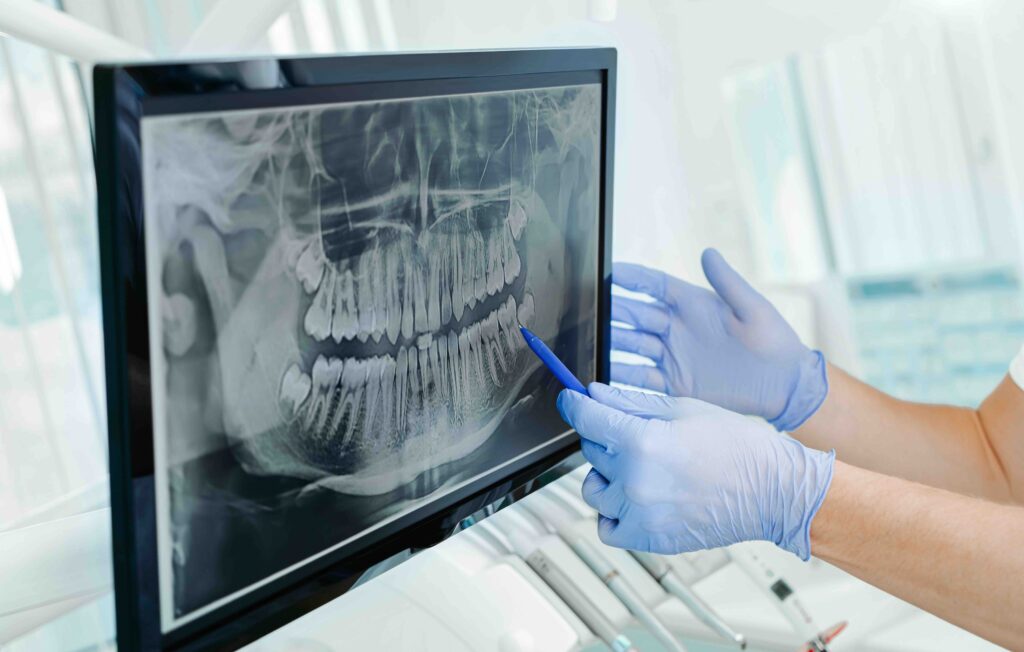
Clinical examination follows. Probing depths, bleeding on probing, soft tissue quality, suppuration, mobility, occlusion, crown contours, and access for cleaning all matter. Radiographs help reveal crestal bone changes, thread exposure, and the pattern of bone loss. In some cases, three-dimensional imaging adds useful information, especially if the question is whether surrounding anatomy, implant angulation, or hidden defects are contributing.
One practical point is worth emphasizing: not every implant complication means the implant is lost. A loose abutment screw can mimic implant failure to a patient who suddenly feels movement. Food packing due to an open contact can create chronic irritation and bone loss if ignored, but it may be reversible if corrected early. The skill lies in identifying the true source of the problem rather than assuming every symptom points to catastrophic failure.
Treatment depends on the cause, not just the symptoms
An inflamed implant with no bone loss is managed differently from an implant with advanced peri-implantitis. A loose crown is different from a fractured implant. A poorly positioned but integrated implant presents a different dilemma again, because it may be technically stable yet functionally or aesthetically compromised.
When inflammation is limited to soft tissues, the approach usually centers on decontamination, improved home care, and correction of local contributing factors. That may include professional cleaning with implant-safe instruments, irrigation, modifications to crown contours that trap plaque, and a reset of oral hygiene technique. Patients are often surprised to learn that the shape of the restoration can make cleaning either easy or nearly impossible. A beautiful-looking crown that cannot be cleaned predictably is a problem waiting to happen.
When bone loss is present, treatment becomes more variable. Non-surgical therapy alone may help in mild cases, but deeper defects often require surgical access to debride the implant surface, reshape tissues, or attempt regenerative procedures. Results can be mixed because implant surface decontamination is challenging. Some implants can be stabilized for years after treatment. Others continue to lose support despite a reasonable intervention.
If overload is the driver, bite adjustment, restorative redesign, screw replacement, or fabrication of a protective night guard may be needed. If the implant is mobile because osseointegration is lost, removal is usually necessary. Removal sounds discouraging, but it is not always the end of the story. Many failed implants can be removed atraumatically, the site allowed to heal or grafted, and a new implant placed later under better conditions. The second attempt often succeeds when the reasons for the first failure are understood and corrected.
Prevention starts long before surgery
The strongest implant cases are built backward. Good clinicians start with the final restoration, then plan the implant position that supports it, then evaluate whether the bone and soft tissues can actually support that position. If not, they discuss augmentation, alternative designs, or whether an implant is even the best solution at all.
A thoughtful prevention strategy usually includes these elements:
- Careful medical and dental risk assessment, including smoking, diabetes control, periodontal history, and grinding habits
- Three-dimensional planning when anatomy or spacing is complex
- Precise implant positioning that respects bone, neighboring teeth, and future hygiene access
- A restorative design that manages force well and can be cleaned effectively
- Regular maintenance visits after placement, not just once a problem appears
That final point is frequently underestimated. Many patients think of an implant as a permanent replacement that requires less attention than a natural tooth. The reality is closer to the opposite. Implants do not get cavities, but the tissues around them can become inflamed quickly, and plaque retention around poorly designed or poorly maintained implant restorations can be unforgiving.
What patients can do to protect their implants
Most long-term implant success happens at home and in routine maintenance visits, not in the surgical suite. Daily plaque control is the baseline. The exact tools vary by case. Some patients do well with floss or implant-specific flossing aids. Others clean more effectively with interdental brushes, rubber-tip stimulators, or water flossers. The right answer depends on the contour of the crown, the size of the embrasures, hand dexterity, and whether multiple implants are splinted together.
Technique matters more than buying the fanciest tool. A patient who spends 60 focused seconds cleaning around an implant every evening often does better than one who owns a drawer full of devices but uses them inconsistently. Regular recall visits also matter, especially for anyone with a past history of periodontal disease. Six months may be appropriate for some people. Others benefit from three- or four-month supportive care intervals.
Smoking cessation is one of the most meaningful steps a patient can take. So is controlling diabetes, wearing a prescribed night guard, and returning promptly if anything feels different. In real practice, the patients who keep their implants healthy for the long haul are rarely the ones with perfect biology alone. They are usually the ones who stay engaged, ask questions, and treat maintenance as part of the investment rather than an optional extra.
When removal is the right choice
There is understandable reluctance around removing a compromised implant. Patients have already invested time, money, and emotion in the treatment. Clinicians also prefer to preserve rather than extract. But there are situations where trying to save a failing implant only increases bone loss and worsens the future options.
An implant with significant mobility generally has a poor prognosis. So does an implant with advanced circumferential bone loss that has not responded to therapy, particularly if access for decontamination is poor or if the position was flawed from the beginning. Removal in these cases can be the more conservative long-term decision because it prevents further destruction of the site.
What matters is how the next step is handled. Site preservation, grafting when indicated, adequate healing time, and a more careful reassessment of risk factors can turn a disappointing outcome into a successful retreatment. It is not unusual for a replacement implant, placed after the cause of the original failure is addressed, to perform well for many years.
The bigger picture
Dental implants remain one of the most reliable treatments in modern dentistry, but reliability is not the same as invincibility. Failure can happen because biology was unfavorable, because forces were poorly managed, because maintenance slipped, or because several small issues combined over time. The most useful way to think about implant failure is not as a mystery or a stroke of bad luck, but as a complication with identifiable patterns.
That perspective helps both patients and clinicians. It encourages better planning, more honest conversations about risk, and faster action when early signs appear. It also reinforces an important truth: successful implants are not simply placed, they are monitored, maintained, and respected. When that happens, most patients can expect their Dental Implants to serve them very well. When it does not, the warning signs are usually there long before the situation becomes irreversible.
Oaks Dental
5000 Parkway Calabasas Suite 308
Calabasas, CA 91302, United States
+1 818-431-2000
FAQ About Dental Implants
What is the downside of a dental implant?
Implants require surgery and a healing period that can last several months. Possible complications include infection, nerve or sinus injury, damage to nearby teeth and failure to bond with bone. Your dentist should assess your health, bone support and alternatives before recommending treatment.
What do dental implants typically cost?
There is no single price for every implant case. The number of teeth replaced, implant components, final restoration and any grafting or extractions affect the total. Request a written estimate covering every stage and confirm insurance benefits and out-of-pocket costs with the practice.
How long do tooth implants last?
An implant can provide long-term support and may last a lifetime with good oral hygiene and regular dental care, but this is not guaranteed. The crown or other restoration may need replacement sooner. Smoking, gum disease and some health conditions can reduce implant success.